
Connecticut Court Clerk Structure
Superior Court clerk administration is unified within the Connecticut Judicial Branch. The state does not elect one county clerk to keep all civil, criminal, family, land, probate, and vital records. Instead, every Superior Court location has a Chief Clerk's Office responsible for cases assigned there. Judicial District clerks handle the civil, family, serious criminal, and related files at their locations. Geographical Area clerks maintain the criminal and motor vehicle matters assigned to those courts.
The word unified describes trial-court administration, not a single office for every public record. Town and city clerks remain separate municipal custodians for marriage licenses, local vital records, and land records. Connecticut Probate Courts also have their own chief clerks. Identify the record first. A divorce decree goes to the Superior Court clerk where dissolution was granted, a marriage certificate goes to a municipal vital-record office or the state vital-record route, and a probate decree goes to the correct Probate Court.
Connecticut Superior Court Chief Clerks
A Superior Court chief clerk maintains the official court file and docket for matters assigned to that location. Typical work includes receiving filings, recording appearances and motions, maintaining judgments and orders, assisting with docket identification, processing copy requests, and certifying eligible court documents. The office is a neutral record custodian. It cannot give legal advice or act as the prosecutor, public defender, or private attorney.
Connecticut location matters. A Judicial District may hold civil, family, serious criminal, and related files, while a Geographical Area location handles many arraignments, criminal proceedings, and motor vehicle cases. Housing and juvenile venues have their own routing. The official Judicial District clerk source pictured here shows the kinds of courthouse contact and access details published by the state.
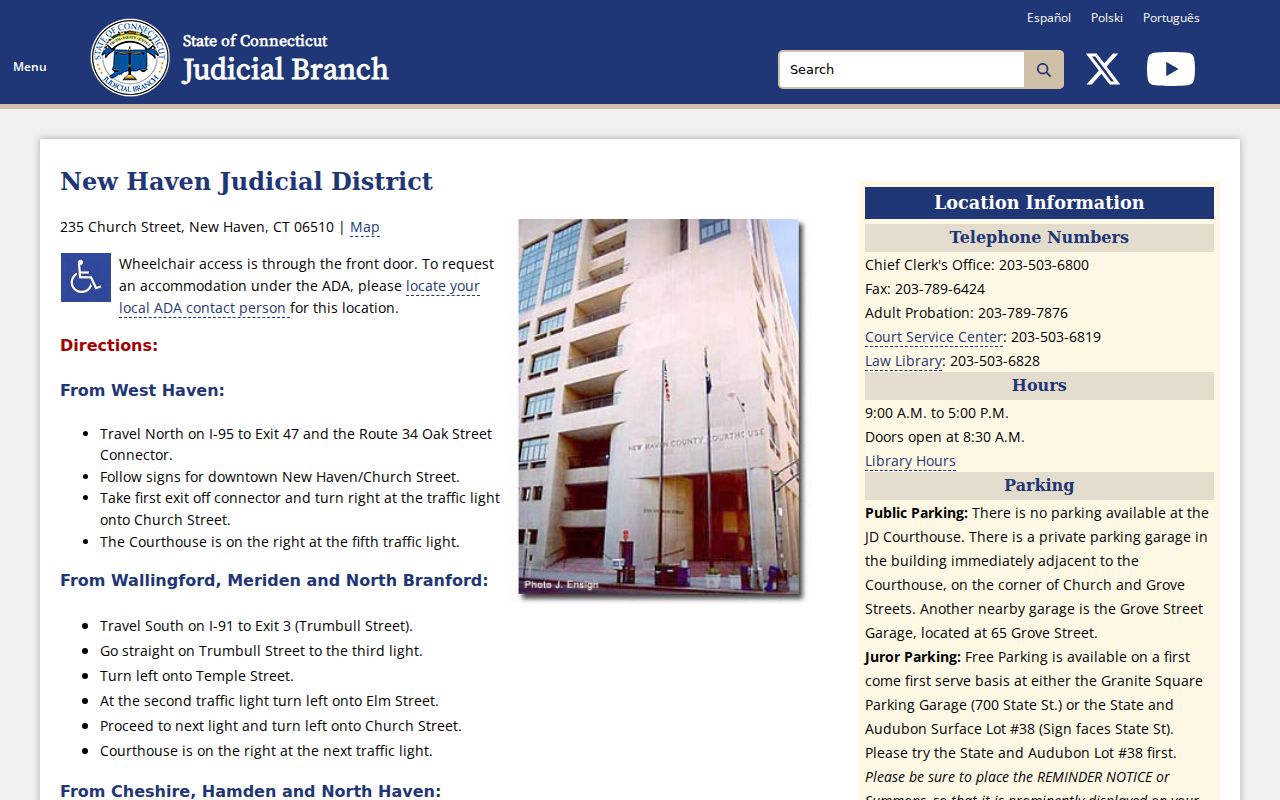
The entry is a representative location page, not a statewide clerk address. Requesters must use the page for the court that holds their case.
- Connecticut civil complaints, appearances, motions, pleadings, judgments, and eligible exhibits.
- Connecticut family files, including divorce, custody, support, and related court orders.
- Connecticut criminal and motor vehicle dockets, charges, events, dispositions, and sentencing records.
- Connecticut housing, small claims, administrative appeal, and other Superior Court records.
- Connecticut certified copies of eligible documents filed at that clerk's assigned location.
Connecticut Clerk Records and Duties
Connecticut's unified Judicial Branch clerk structure supports Superior Court cases statewide, but it does not absorb municipal or Probate Court duties. The following routing table prevents the common mistake of asking a court clerk for a marriage license, land record, or original probate file.
| Record or Service | Correct Connecticut Clerk | Key Limit |
|---|---|---|
| Connecticut civil, family, housing, and small claims file | Connecticut Superior Court chief clerk at assigned location | Online display may omit restricted or paper-only documents. |
| Connecticut criminal or motor vehicle case | Connecticut Superior Court chief clerk at the assigned Judicial District or Geographical Area | Erased, juvenile, and youthful offender records are not public. |
| Connecticut divorce decree | Connecticut Superior Court clerk where dissolution was granted | DPH does not maintain divorce decrees. |
| Connecticut marriage license or municipal vital record | Connecticut town or city clerk / vital records office | Eligibility and identification rules may apply. |
| Connecticut estate, trust, guardianship, or conservatorship | Chief clerk of the applicable Connecticut Probate Court | Case lookup has date, type, and document-access limits. |
| Connecticut land record or deed | Connecticut municipal town or city clerk | Not part of a Superior Court case file. |
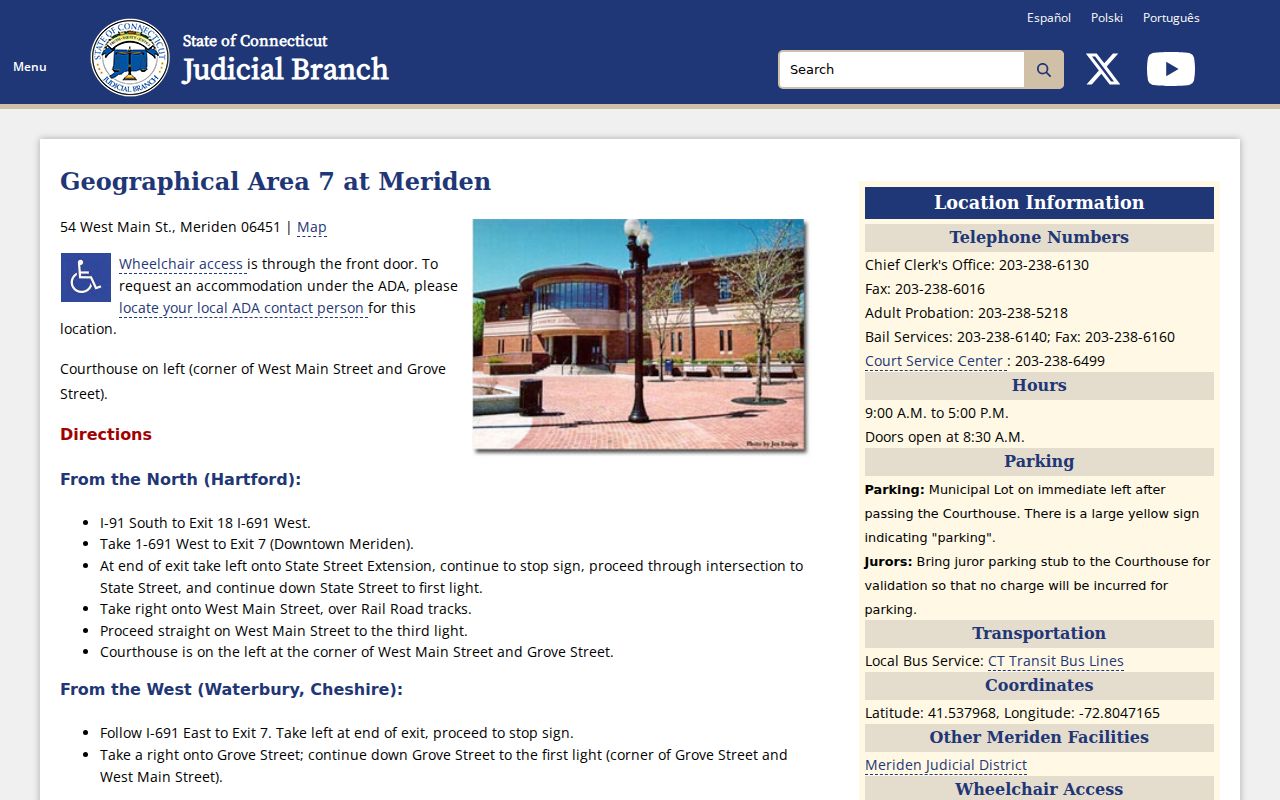
The Geographical Area clerk source shown here demonstrates how criminal and motor vehicle offices are listed separately from Judicial District record counters.
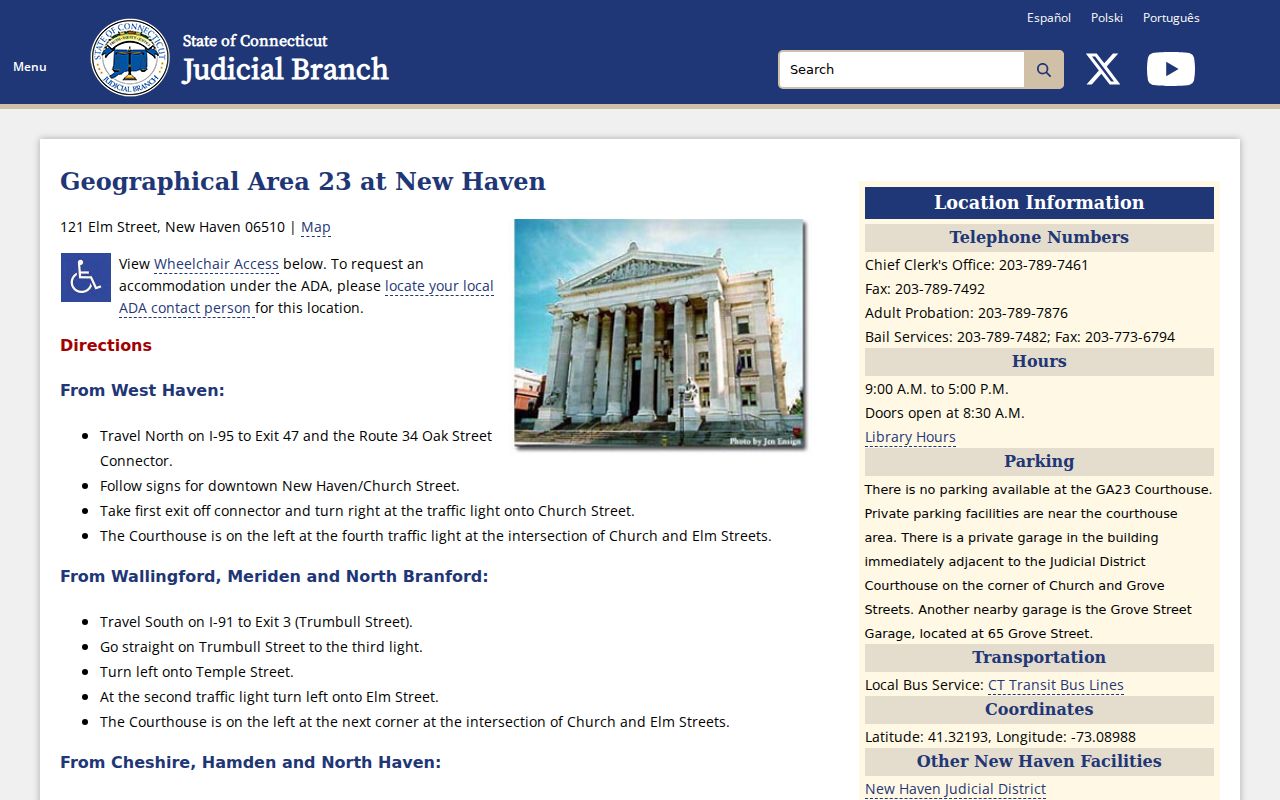
A docket's court code is therefore one of the best clues to the right chief clerk.
Connecticut Court Clerk Duties
Chief clerks preserve the official case record, accept authorized filings, assign and maintain case data, collect applicable fees, and provide access under court rules. They support the public counter and coordinate file custody at their location. Court Service Centers may help self-represented litigants with approved resources, but those centers do not replace the clerk as custodian and do not provide legal representation.
Statewide administrative leadership does not replace local file custody. The Judicial Branch press source depicted here records appointments and statewide administrative developments.
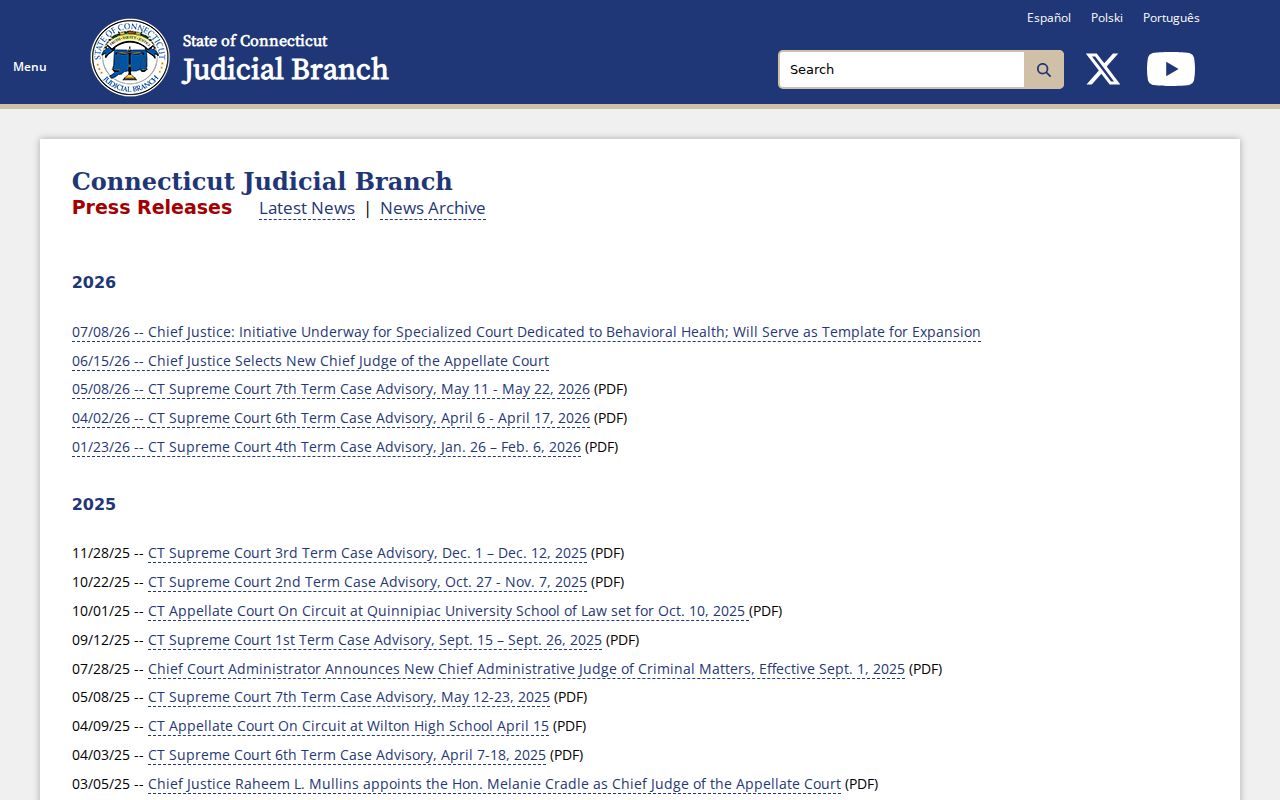
Such administrative roles guide policy, while the chief clerk at the assigned courthouse remains the practical source for an individual case record.
- Accept authorized Connecticut pleadings and record them in the correct case.
- Maintain the official Connecticut docket, electronic entries, and paper or offline materials.
- Process Connecticut court orders, judgments, process, and notices within clerk authority.
- Collect Connecticut filing, copy, certification, and other court charges required for the transaction.
- Provide Connecticut public inspection and issue plain or certified copies when allowed.
- Protect Connecticut sealed, erased, juvenile, and confidential material from unauthorized release.
Request Connecticut Certified Court Copies
A Connecticut certified copy bears the clerk's authentication that it is a true copy of the official Connecticut document. Courts, agencies, lenders, title professionals, and parties may require Connecticut certification instead of an online printout. The requesting person must identify both the case and the document. Ask whether a plain, certified, or exemplified copy is needed before paying.
- Use the official Connecticut case lookup to find the docket number, court location, parties, case type, and filing year.
- Identify the assigned Connecticut Superior Court chief clerk through the Connecticut record-area directory.
- Call the Connecticut office before traveling. Confirm file custody, public status, and certification options.
- Submit the exact Connecticut document title, copy count, delivery method, and requester contact details.
- Confirm the Connecticut fee and payment method. Ask for a page estimate and keep the clerk's receipt.
Note: A public docket printout may show the result, but it is not a certified copy of the underlying judgment or order.
Connecticut Clerk Request Fields
A precise request reduces search time and avoids receiving the wrong case. Connecticut clerk offices can route faster when the docket and location are provided. If the number is unknown, supply enough name, date, and case-type detail to distinguish similar matters.
| Field | Priority | Notes |
|---|---|---|
| Connecticut Docket Number | Best identifier | Include every location, category, year, number, and suffix component. |
| Connecticut Party Names | Required when docket is unknown | Give full legal names and party roles when possible. |
| Connecticut Court Location | Important | Name the Judicial District, Geographical Area, Housing Session, or other venue. |
| Connecticut Filing Year | Important | Narrows name-only searches and helps locate older paper files. |
| Connecticut Document Requested | Required | Identify the judgment, order, motion, information, or other exact item. |
| Connecticut Copy Type | Required | State plain, certified, or exemplified and the number needed. |
| Connecticut Delivery Details | Required for remote request | Provide a mailing address and a phone or email for fee questions. |
Connecticut Clerk Record Fees
Connecticut does not use a generic county surcharge model. Superior Court is state administered, municipal clerks charge authorized vital and land-record fees, and Probate Court fees follow statewide statutes and calculators. CGS section 1-212 supplies public-record copy ceilings for covered agencies, but those limits do not automatically set every adjudicative court-copy charge. Obtain a live quote from the responsible clerk.
| Item | Official Amount Found | Scope |
|---|---|---|
| Connecticut state-agency administrative paper copy | Up to $0.25 per page | Covered state public records under CGS 1-212, not every court-copy product. |
| Connecticut covered public-agency paper copy | Up to $0.50 per page | Statutory ceiling for covered non-state offices. |
| Connecticut marriage license | $50 | Municipal registrar or town clerk for the ceremony town. |
| Connecticut certified marriage certificate | $20 per copy | Subject to vital-record eligibility and identification rules. |
| Connecticut Superior Court copy | Confirm with clerk | Case and document type control; no single amount was supported. |
| Connecticut Probate certified copy | $5 minimum plus $1 per page over five | Official Probate Court copy calculator terms. |
Superior Court filing charges vary by case and filing type. A civil complaint, small claim, family action, appeal, and postjudgment motion do not share one rate. A person who cannot afford costs should ask the Connecticut clerk for the current fee-waiver form and instructions. A judge, not the clerk, decides the request.
Note: Connecticut fees are transaction-specific, so confirm the live copy, certification, filing, and payment terms with the exact clerk.
Connecticut Electronic and Offline Records
The Judicial Branch Case Look-up hub provides public search routes, while Judicial Branch E-Services supports electronic filing and service for authorized users and eligible cases. E-filing does not make every filed image public. Sealed, confidential, protected, and nonelectronic documents remain subject to court access rules. The clerk is the fallback for older records and items absent from the public display.
Probate uses separate case lookup and eFiling systems. Some online probate documents require an access code, and an item marked offline may require inspection of the paper court file or a Probate Court public-access computer. Municipal clerks set their accepted mail, in-person, and authorized online channels for vital and land records.
Connecticut Clerk Access Boundaries
The Connecticut Freedom of Information Commission administers the Freedom of Information Act for covered public agencies, but adjudicative case-file requests usually go to the court clerk under Judicial Branch rules. The FOI Commission source shown here is valuable for administrative public-record guidance.
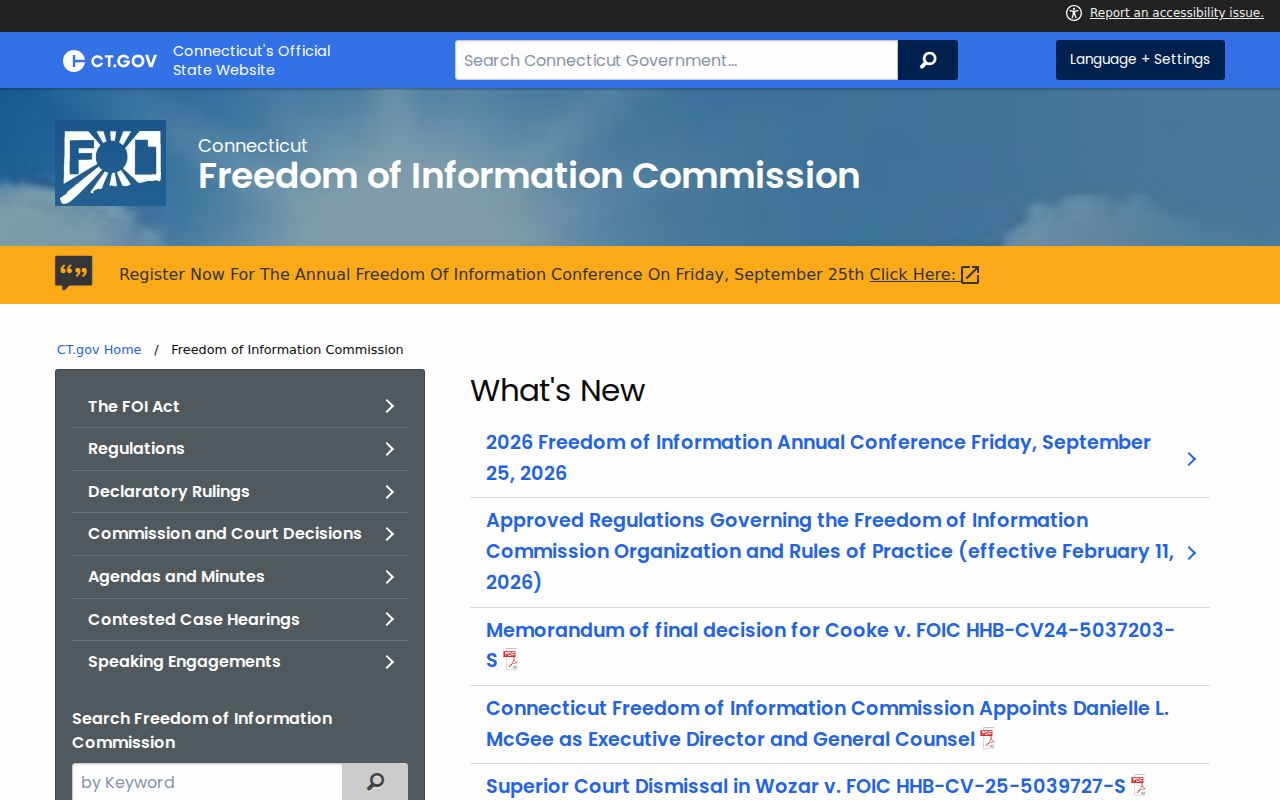
It should not be used as a substitute address for a motion, judgment, criminal disposition, or other adjudicative court record.
Juvenile, youthful offender, erased, sealed, adoption, mental health, and protected personal information may be withheld. When a clerk cannot provide a record, ask whether the issue is wrong-office routing, a missing identifier, nondigitized custody, or a legal restriction. If access is denied, request the rule, statute, or order that supports the decision.
Note: The Connecticut Freedom of Information Commission is not the filing counter for an adjudicative Superior Court case document.
Locate Connecticut Court Clerks
Connecticut has eight historical counties and no county government. The project's 27 record areas include those eight geographic counties and 19 municipality-specific routes. They do not represent 27 county clerk offices. Browse the Connecticut record-area directory, choose the relevant town or region, and use the official assignment to find a Superior Court, Probate Court, or municipal clerk.
A second Geographical Area source shows why location-level routing matters. The official clerk and courthouse listing pictured here provides distinct contact and access details for another Superior Court criminal and motor vehicle venue.
Always match the docket's court code and case type to the destination before sending a request or traveling.