
What Connecticut Probate Covers
Connecticut Probate Courts are separate from Superior Court. Their work includes decedents' estates, admission of wills, testamentary and other trusts, fiduciary appointments, guardianships, conservatorships, adoptions, children's matters, and some commitment proceedings. The correct court depends on probate venue and the towns assigned to a probate district.
Connecticut has 54 Probate Courts and six Regional Children's Probate Courts. A district may serve one municipality or several towns. Appeals from Probate Court may proceed to Superior Court, but that does not make the original probate file a Superior Court record. Use the probate locator first, then ask the district chief clerk about inspection, filing, certification, or a protected matter.
Estate and trust work also differs from family litigation. A will-file-only matter, a small estate handled by affidavit, a tax-purposes estate, and a regular decedent estate receive different case codes and may require different forms. The public lookup identifies DR for a regular estate, DAT for an affidavit estate, DT for tax purposes only, DS when the state acts under the cited authority, and DW for will file only. Trust codes include T, TL, TO, and TT.
The Connecticut Probate Courts homepage shows the system's official lookup, locator, forms, and eFiling routes.
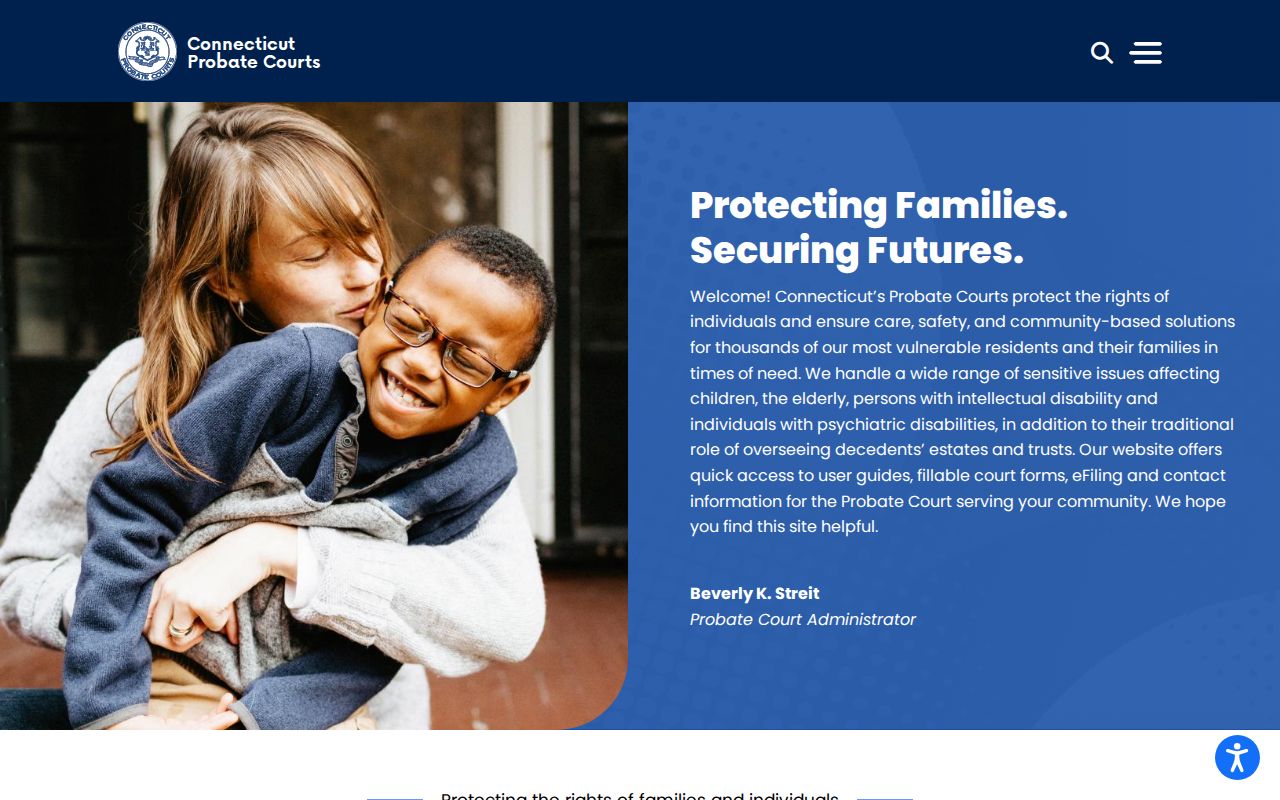
Those tools share one statewide entry point while each local Probate Court remains responsible for its own case files.
Connecticut Probate Terms Defined
Probate docket entries and forms use terms that identify the person, authority, and type of proceeding. These plain-language definitions help distinguish an estate file from a guardianship or conservatorship matter.
- Testator
- The person who made a will offered to the Probate Court after death.
- Executor or fiduciary
- The person appointed to administer an estate or trust and meet court duties.
- Intestate
- Dying without a valid will, so statutory succession rules govern distribution.
- Guardianship
- A proceeding concerning legal authority and care for a minor.
- Conservatorship
- A court arrangement for an adult who needs help managing personal or financial affairs.
- Inventory and accounting
- Fiduciary reports identifying property, transactions, and administration of the estate.
Terminology also affects document requests. Asking for the fiduciary appointment, inventory, account, decree, or recorded will is more precise than asking for the whole file. The chief clerk can explain which public copy product exists, but cannot provide legal advice about the meaning of an order or a fiduciary's duties.
Search Connecticut Probate Records
The Probate Case Lookup covers public decedent-estate and trust case data from January 5, 2011 forward. Searches may return some earlier matters, but coverage before that date is incomplete. Select a case number for available fiduciary contact information and the district name for the court's contact details. The lookup is not a complete index of guardianship, conservatorship, children's, medical, or other protected proceedings.
The lookup begins with a case-type choice for decedent estates or trusts and the available search criteria. If a name search fails, check spelling, prior names, the approximate filing year, and whether the correct probate district was used. A case filed before full electronic coverage may exist only in an older index or paper file. The local clerk is the fallback when the statewide tool does not return the expected matter.
The official case search is pictured in this source capture.
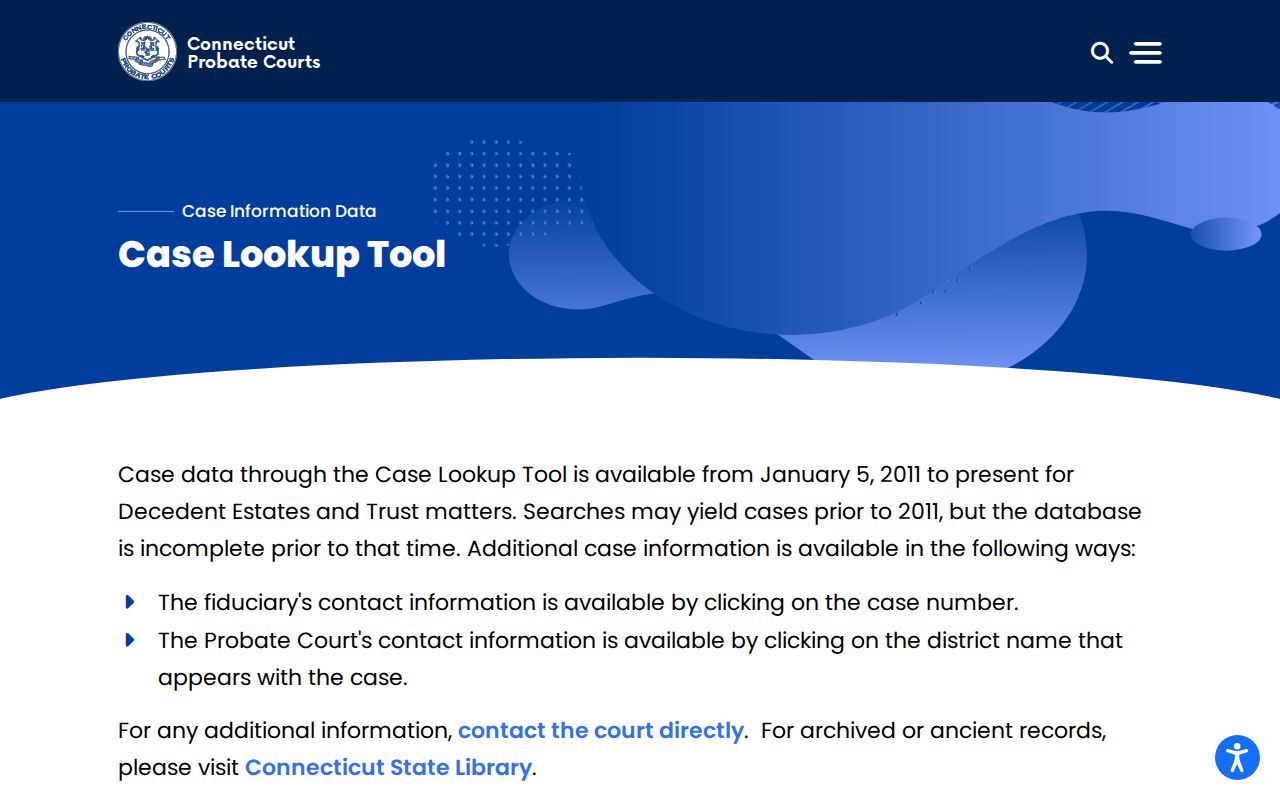
Its limited case-type menu is a signal to contact the local court when the matter is not a decedent estate or trust.
- Identify the town tied to the decedent, trust, protected person, or filing.
- Use the court locator to find the assigned probate district.
- For an estate or trust, search the statewide lookup by its available criteria.
- Open the case and district links for fiduciary and court contact information.
- Ask the chief clerk about older, offline, certified, or restricted documents.
Connecticut Probate Court Locations
The Probate Court locator lists districts, judges, chief clerks, towns served, hours, addresses, telephone numbers, and fax numbers. Use the town served as the routing key. A historical county name is not enough because Connecticut probate districts cross the modern project's county and municipal record areas.
Call before traveling. Court hours and satellite-office schedules can differ, and the file may be held at the district's main office. Provide the decedent or party name, case number if known, case type, and approximate filing date. Ask whether a public-access computer, paper-file inspection, advance copy request, identification, or payment is required.
The locator's district presentation appears in this source capture.
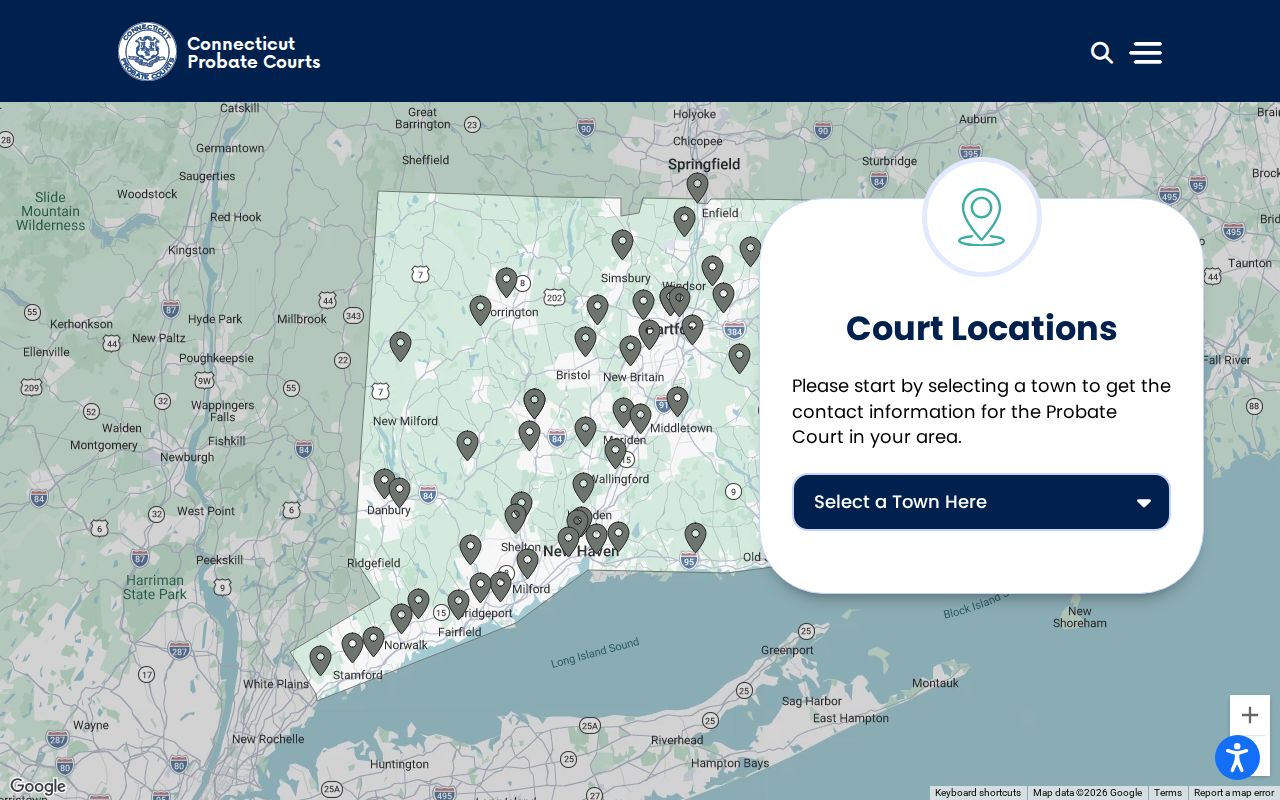
The town lists help prevent filing or requesting a record from the wrong local probate office.
Find the local court: Browse the 27 Connecticut record areas, then confirm the exact probate district with the statewide locator.
Connecticut Probate Court Fees
Connecticut Probate Court fees are statutory and proceeding specific. Several petitions carry fixed fees, while decedent-estate fees depend on estate-related values under CGS section 45a-107. The official calculators provide estimates; the court supplies the exact amount. Unpaid covered estate and accounting fees may accrue interest at 0.5 percent per month.
| Item | Amount |
|---|---|
| Appoint estate examiner | $50 |
| Hear disallowed claim | $50 |
| Open safe-deposit box | $50 |
| Custody of remains | $150 |
| Many other petitions outside estates/accountings | $250, subject to exclusions |
| Certified copy | $5 minimum plus $1 for each page over five |
| Document recording | $3 for each page over five |
For estate fees, the calculator considers inventory and estate-tax values, certain out-of-state property, net wrongful-death proceeds, and property passing to a surviving spouse. Contact the Probate Court before relying on an estimate.
Payment through eFiling may support electronic check, debit card, or major credit cards when that channel is available. A fee estimate does not decide whether a waiver or indigency procedure applies. Request the correct form and ruling process from the court. Do not send a generic amount before the clerk confirms the proceeding and invoice.
What Connecticut Probate Records Show
An estate file may contain the will, petition, notice, fiduciary appointment, orders, inventory, creditor claims, accountings, tax-related filings, and closing or distribution orders. A trust matter may identify the trust category, fiduciary, court district, and docket activity. Guardianship and conservatorship files use different forms and may contain protected personal, medical, or financial information.
Public lookup results are narrower than the official file. The case number and district can help a requester ask for specific material, but access depends on the document's status and the requester's role. For a legal transaction, state whether a plain, certified, or exemplified copy is required.
The official local Probate Court profile demonstrates the district-level contact format.
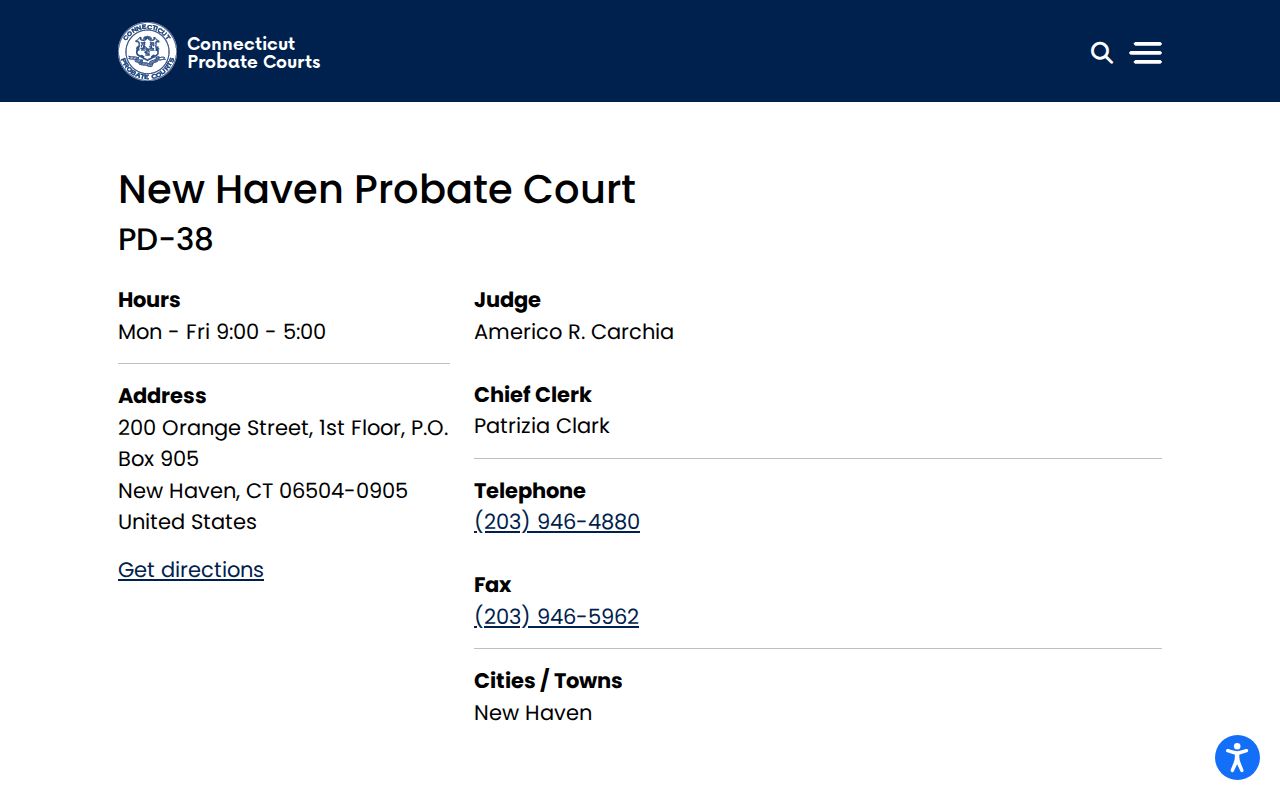
Local profiles name the chief clerk and office channels needed for case-specific copy requests.
Restricted Connecticut Probate Records
Not every probate document is publicly viewable. Children's matters, conservatorships, commitment records, medical details, financial data, and confidential-information sheets may be restricted, redacted, or available only to authorized participants. A public case reference does not override those limits. Ask the chief clerk whether inspection is allowed and what court permission or proof of status is needed.
The Probate Court document-viewing guidance explains access codes and offline files.
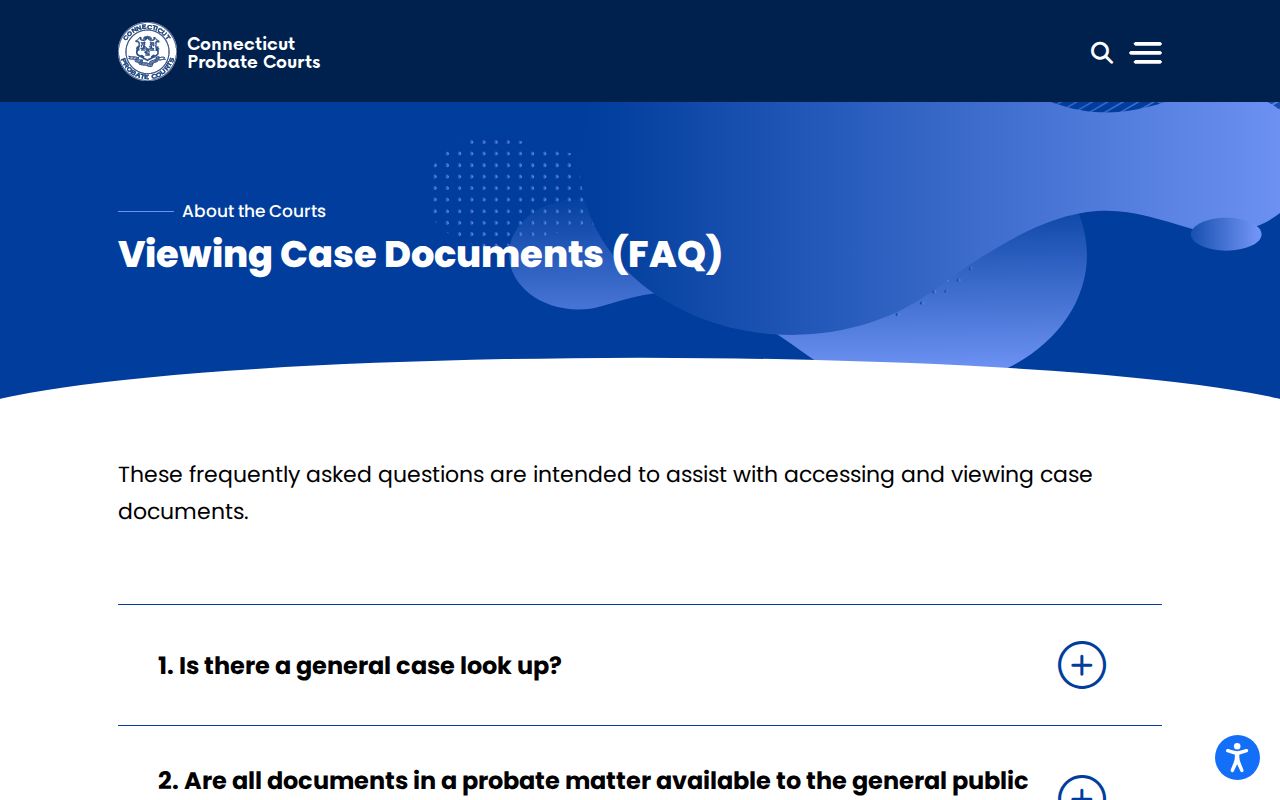
Documents marked Offline require the paper court file or a Probate Court public-access computer rather than remote viewing.
Probate eFiling is mandatory for attorneys in probate matters and optional for registered self-represented parties when the court grants electronic access. Filing access does not make confidential material public.
Through eFiling, an authorized user may start a case, submit papers in a pending matter, serve other eFilers, receive notices, and view the permitted court file. A matter first opened on paper may accept later electronic submissions. Fillable Probate Court forms must be completed and signed, and a required confidential-information sheet must be filed separately from the public petition.
Find Connecticut Probate Districts
Route by town and probate district, not by an assumed county courthouse. The Connecticut record-area directory covers all 27 folder-backed areas, including eight historical counties and 19 municipalities. Select the relevant area, confirm the town in the official Probate Court locator, and contact that district for files that predate complete online coverage or are unavailable remotely.
Prepare a focused request before contacting the Connecticut Probate Court. Give the case number if known, the decedent or party's full name, the matter type, and the approximate filing date. State which document is needed and whether certification is required. Ask about inspection, electronic delivery, copy cost, accepted payment, and identification. If access is denied or limited, request the governing reason and the process for seeking court authorization. This approach works for paper archives, offline scans, and public documents that the statewide lookup indexes without displaying.