
Search Connecticut Traffic Cases
Start at the Judicial Branch Criminal and Motor Vehicle Case Look-up. Connecticut divides public access into pending matters, convictions, daily dockets, and case events. Search by defendant when no docket is known, or use the docket form when the citation supplies a full number. A pending search accepts a last name, first initial, birth year and range, court location, and category. The docket tool instead uses a court code, case type, two-digit year, number, and suffix.
Connecticut does not operate county traffic courts. Motor vehicle matters proceed in Superior Court, often at a Geographical Area location. The ticket's location code controls. Parking citations usually stay with the issuing municipality and may never appear in the statewide motor vehicle docket.
- Read the citation and identify its court, response date, and case type.
- Search the Judicial Branch system by defendant or docket number.
- Select Motor Vehicle or the referred suspension category when appropriate.
- Compare the result with the paper citation before paying or entering a plea.
- Contact the listed Superior Court clerk if the record is missing, older, or needs certification.
Connecticut Traffic Case Channels
The Centralized Infractions Bureau, or CIB, provides the statewide response route for many payable infractions. It is an administrative part of the Judicial Branch, not a separate trial court. A person follows the ticket instructions to pay or plead not guilty. Contested tickets and matters marked for a required appearance move to the assigned Superior Court. More serious driving charges are filed directly on criminal or motor vehicle dockets.
The court assignment follows the town and court location rather than an operational county. Municipal offices keep local parking citations. Those records use city payment and appeal tools until another enforcement step produces a state case or license action.
| Court Level | Traffic Cases Handled | Where to Find |
|---|---|---|
| Centralized Infractions Bureau | Eligible infractions and ticket responses | Judicial Branch CIB |
| Superior Court | Contested, appearance-required, criminal, and motor vehicle cases | Assigned Judicial District or Geographical Area |
| Municipal office | Local parking citations and appeals | Issuing city or town |
Connecticut Motor Vehicle Files
A Judicial Branch file may concern an infraction, motor vehicle violation, criminal driving offense, or referral for motor vehicle or boat license or registration suspension. The category affects public display and the next step. Infractions and violation convictions are not shown in the public conviction display, even though an eligible pending ticket may use CIB. Youthful-offender and juvenile matters are also excluded. Unvacated bail or collateral forfeitures tied to motor vehicle convictions may appear during the applicable display period.
- Infractions use the CIB response path when eligible.
- Motor vehicle cases appear in the assigned Superior Court system.
- Criminal driving charges require the criminal docket and may carry separate DMV action.
- Referred suspension matters concern a motor vehicle or boat license or registration.
- Parking citations normally remain municipal records.
What Connecticut Traffic Records Show
The public case result identifies a court proceeding, not a complete driving history. Available fields vary with the case and disclosure rules. A docket may show the defendant, location, charge, event dates, disposition, and financial or appearance information. The official clerk file can contain notices and orders that are not posted as anonymous document images.
| Field | What It Shows |
|---|---|
| Docket Number | Court code, case type, year, sequence, and suffix. |
| Court Location | The Judicial District or Geographical Area assigned to the matter. |
| Charge or Citation | The alleged motor vehicle offense filed with the court. |
| Court Event | Scheduled appearance, plea, hearing, or other activity. |
| Disposition | How the court resolved a charge when public. |
| Status Data | Payment, failure-to-appear, or referral information when displayed. |
Connecticut Traffic Search Fields
Name search helps when a ticket has not yet produced a known docket. Docket search is more exact after a court number is assigned. Common names can return several people, so birth year and location are useful checks. A blank result does not prove cancellation. Entry timing, restricted categories, and an incorrect location code can prevent a match.
| Search Field | Type | Required | Notes / Format |
|---|---|---|---|
| Last Name | Text | For defendant search | Searches names beginning with the entry. |
| First Initial | Text | No | One character. |
| Birth Year and Range | Number | No | Four-digit year and optional range. |
| Court Location | Dropdown | No | Use the court printed on the citation. |
| Case Type | Dropdown | No | Criminal, Motor Vehicle, or referred suspension. |
| Docket Components | Mixed | For docket search | Court code, type, year, number, and suffix. |
Respond to Connecticut Tickets
Use only the method printed on the citation or linked from the Judicial Branch. Connecticut warned in 2025 that fraudulent texts and calls claimed to concern DMV motor vehicle violations. The Branch said it does not contact residents by phone or text about them. Enter the official CIB or DMV address yourself.
- Classify the ticket as CIB-eligible, appearance-required, or municipal.
- Use the official Judicial Branch route for payment or a not-guilty response.
- For a contest, follow the plea instructions and monitor the court date.
- If an appearance was missed, check the docket and call the clerk or Bail Services.
- After resolution, check DMV separately for license status.
Connecticut Traffic Access Limits
Connecticut court access rules govern adjudicative files. General Freedom of Information Act language does not make every pleading or protected image available online. Sealed, erased, juvenile, and youthful-offender matters remain restricted. A public docket can exist while specific documents require a clerk request. DMV records are a separate class of personal motor vehicle data, also subject to the federal Driver's Privacy Protection Act and state access rules.
Important: A court result may omit an infraction from the conviction display while DMV still holds an authorized administrative history.
Connecticut DMV Driver History
The Connecticut DMV Driver History Request is the official route for a certified history. Most current or former Connecticut license holders may request their own record online. The service authenticates with the residence street number on DMV's file, date of birth, and driver-license last name. A person seeking another driver's history must use the permitted mail process described through Form J-23. An eligible driver may also request a certified copy in person by appointment.
The official request page illustrates the separate DMV access path.
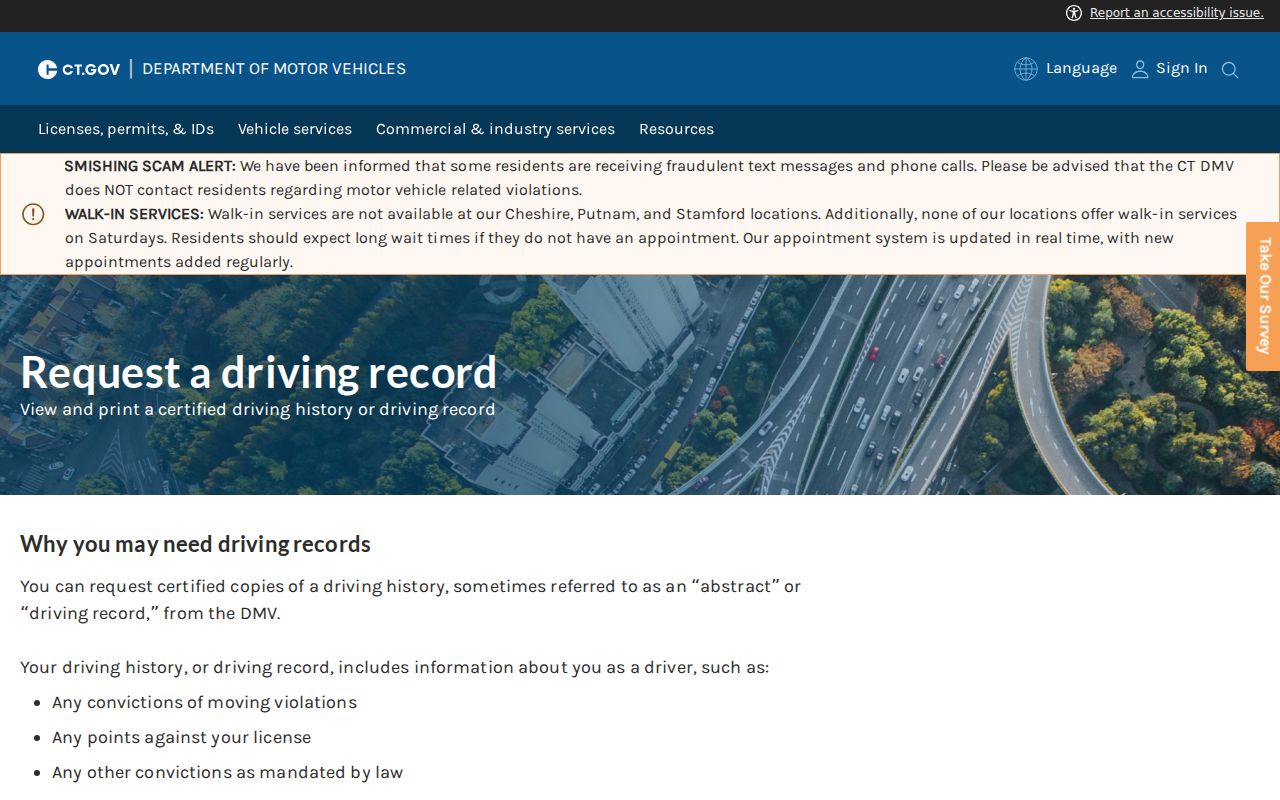
The product is an administrative driving history, not the citation, plea, motions, or judgment stored in Superior Court.
Court dispositions flow to DMV through reporting, then DMV updates its file. The systems may not change at the same moment. If the docket shows resolution but the license remains suspended, use the DMV suspension instructions and confirm what correction or payment remains.
Connecticut Court vs Driver Record
The court record answers what happened in one filed case. The driver record answers what DMV currently holds about the person's driving history and license. Corrections follow different routes. Ask the Superior Court clerk about a docket error, but ask DMV about its driver file after confirming the court disposition.
| Record Type | Source | What It Shows | How to Access |
|---|---|---|---|
| Court Traffic Record | Connecticut Judicial Branch | Docket, charge, dates, events, and public disposition | Online lookup or assigned Superior Court clerk |
| Driver Record | Connecticut DMV | Certified history, reportable violations or sanctions, and license status | Online for one's own record, permitted mail request, or appointment |
| Correction Route | Agency owning the file | Source documentation and amended status | Court clerk for case data; DMV for driver data |
Connecticut CDL Consequences
A commercial driver should not infer license consequences from a public court result alone. The citation, Superior Court disposition, and DMV commercial-license action serve different functions. Federal reporting rules can make a disposition important even when the driver was in a personal vehicle. Before choosing a plea or ticket response, confirm the effect on the Connecticut CDL and any required employer notice with an authorized source.
Connecticut DUI Case Records
Operating-under-the-influence matters are criminal motor vehicle cases, not ordinary payable infractions. The Superior Court file can show the charge, hearings, plea, and disposition. DMV may impose a separate administrative suspension or restoration requirement. For filed allegations and changing charge status, use Connecticut arrest and charge records.
Connecticut Alternative Resolutions
Do not assume a driver course, diversion, negotiated disposition, or dismissal removes every trace from both systems. Eligibility depends on the charge and court process. Successful relief may change the judicial case, yet DMV may require a separate update based on an amended report. Ask the assigned clerk what the court order does, then verify the driver history after processing.
Erased Connecticut Traffic Records
Connecticut erasure rules can remove qualifying criminal information from public access, while juvenile and youthful-offender files have separate restrictions. Public conviction tools also have category and time limits. Those display rules are not the same as correcting a DMV driver history. A person relying on an erasure or modified disposition should obtain court documentation and follow DMV's correction process if the administrative file has not changed.
Connecticut Traffic Record Fees
A certified Connecticut DMV driver history costs $20. The suspension page lists a $175 restoration fee, but the amount due and legal basis for restoration should be confirmed before payment. Court copy charges depend on the requested product and clerk. Ask whether a plain copy, certification, or electronic image is needed.
The official DMV fee schedule documents the driver-history charge.
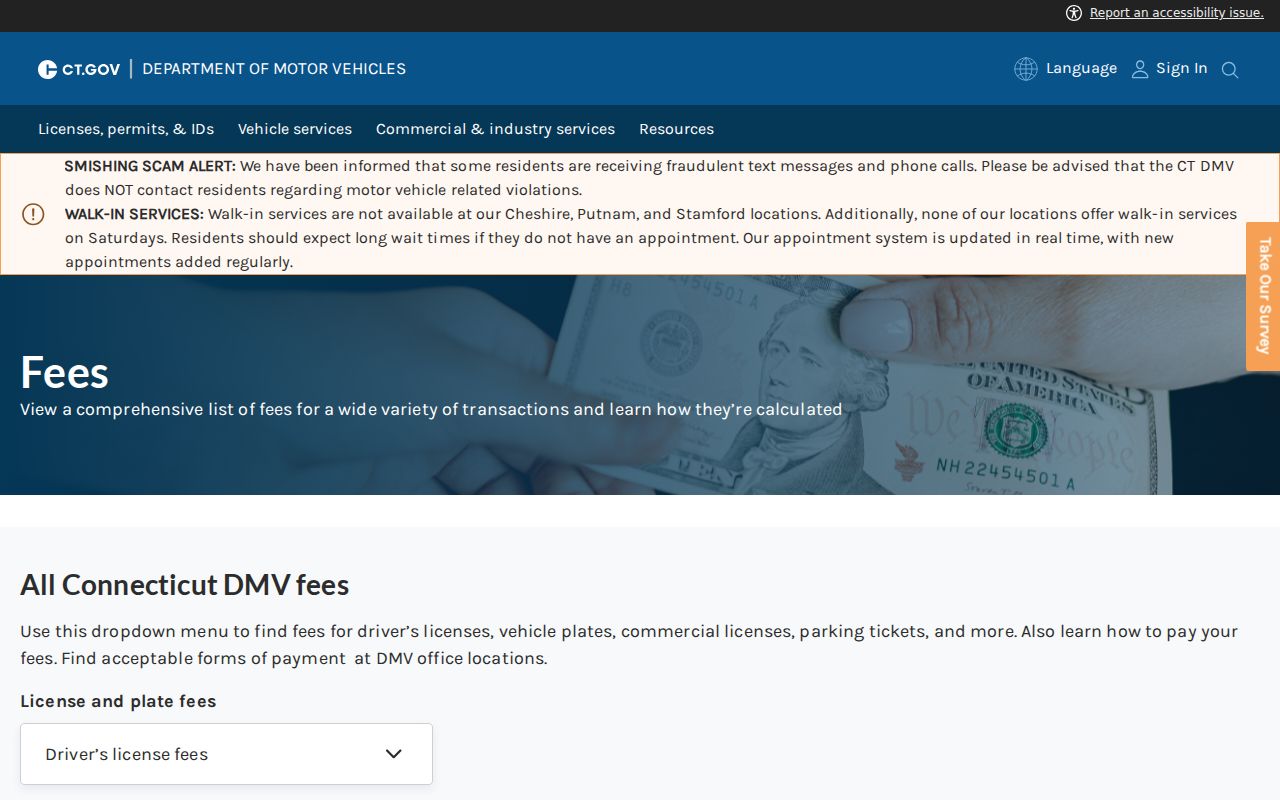
The schedule separates driver-record costs from ticket payments made through the courts.
The DMV restoration page explains suspension correction and payment.
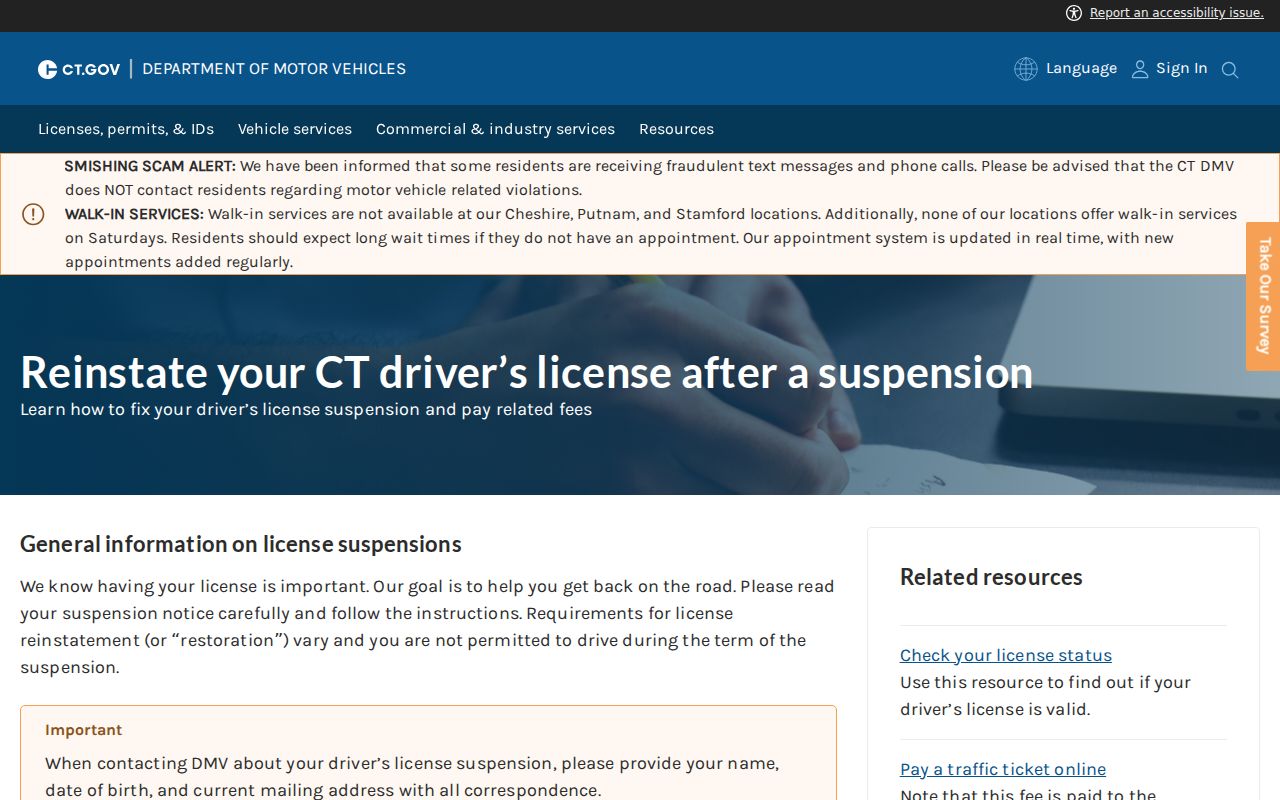
Restoration remains a DMV process even when the event began in a Superior Court traffic case.
| Item | Amount |
|---|---|
| Certified driver history | $20 |
| License restoration | $175 listed; confirm balance |
| Traffic case copy | Case and product specific |
For a municipal parking office or the correct Superior Court region, browse the 27 Connecticut record areas. The areas route by municipality and historical county because Connecticut has no operational county court system.